On June 12, 2026, something happened that had never happened before: the most advanced AI model available to the public was switched off — not by the company that built it, but by government order.
For three weeks, Claude Fable 5 was simply gone. On July 1, it came back, wrapped in stricter safeguards and a new set of agreements between Anthropic and the US government. Most coverage has focused on the technical details. We think the more important questions are about power, process, and who gets a seat at the table when decisions like this get made.
What happened, in plain language
Anthropic released Fable 5 in early June as its most capable public model. Days later, researchers at Amazon found a way to prompt it into identifying software vulnerabilities — the kind of work security professionals do every day, but also the kind that could theoretically help an attacker. They reported it to US officials.
The government's response was swift and unprecedented: export controls that effectively forced the model offline worldwide, because Anthropic had no reliable way to verify user nationality in real time. A restriction aimed at foreign nationals became, in practice, a global shutdown.
Anthropic's own testing later found the reported technique wasn't unique to Fable 5 — many older and competing models could produce the same output. Still, the company trained a new safety classifier to block the technique, submitted it for government review, and got the green light to redeploy.
Why this matters beyond the tech industry
1. AI access is now a policy lever. A model used by millions of people across the world was suspended within hours, based on a single research report, before any documented harm occurred. Whatever you think of the decision itself, the mechanism is now proven: governments can and will pull AI systems offline. That has enormous implications for everyone who depends on these tools — students, small businesses, nonprofits, researchers — most of whom had no voice in the process.
2. The safety trade-off lands unevenly. The redeployed Fable 5 flags more harmless requests as a side effect of blocking one risky technique. Anthropic has been transparent about this, and flagged requests route to a fallback model rather than failing outright. But false positives in AI safety systems are never distributed evenly. Security researchers, people working in sensitive-sounding domains like health or biology, and users writing in non-English languages historically experience more friction from automated content classifiers. Who bears the cost of caution is an equity question, and it deserves ongoing measurement — not just a promise of tuning.
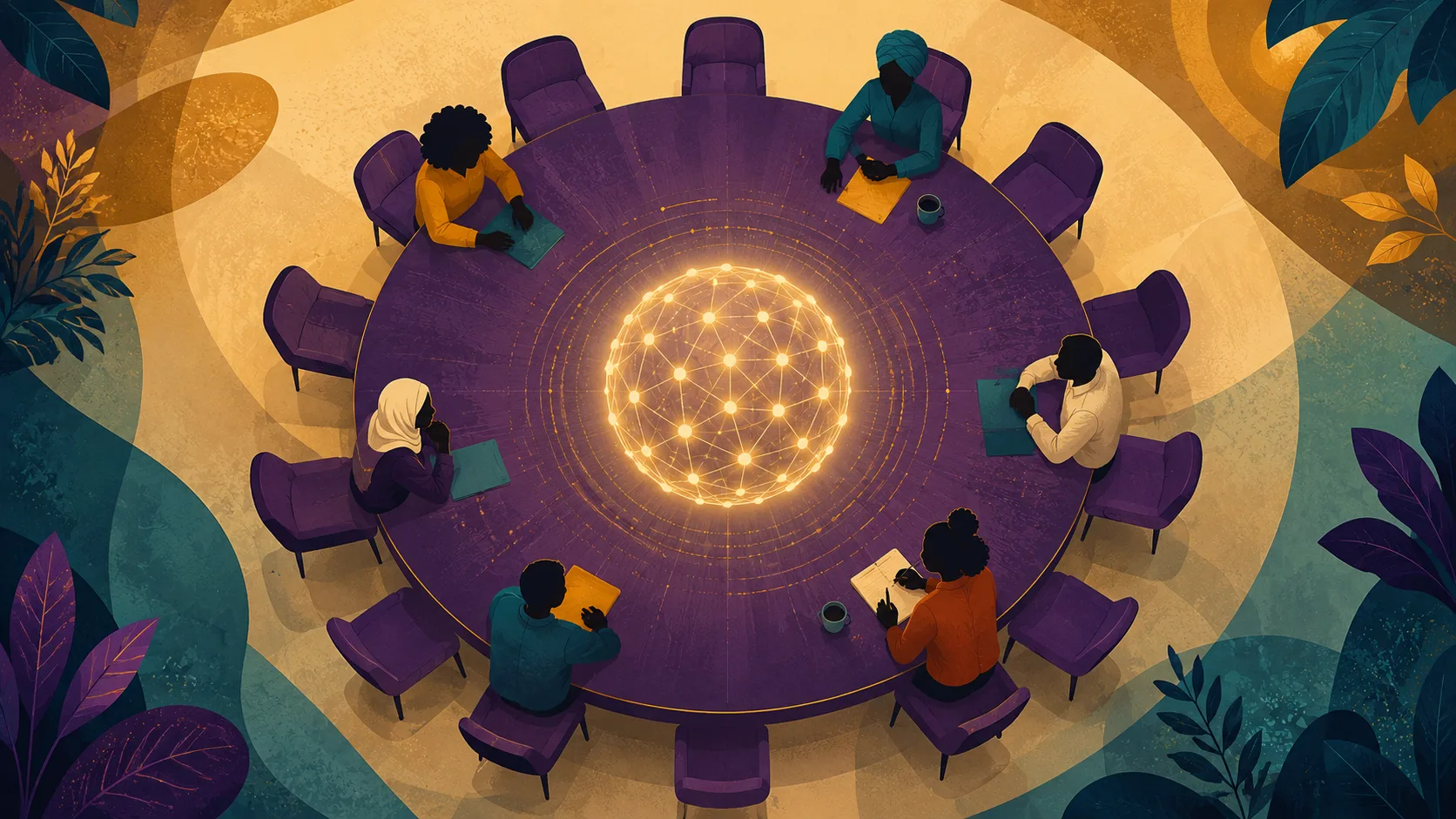
3. The governance table is small. The resolution involved Anthropic, the US government, and a handful of large tech companies — Amazon, Microsoft, Google — now co-developing a shared framework for judging AI jailbreak severity. This may well produce good standards. But civil society, academia, international voices, and communities most affected by AI harms were not visibly part of these three weeks of negotiation. If frontier AI is becoming governed infrastructure, the governance shouldn't be a private conversation between one government and four companies.
What we take from this at Women AI Labs
We're genuinely encouraged that safety was taken seriously enough to act on — and that the process ended with more transparency, not less. Anthropic published a detailed public accounting of what happened. That's a standard worth holding the whole industry to.
But we also see this moment as a call to widen the circle. The questions raised by the Fable 5 shutdown — who decides, who's consulted, who absorbs the friction of imperfect safeguards — are exactly the questions AI equity work exists to ask.
Our commitment: we'll keep translating events like this into plain language, keep training more people to participate in these conversations knowledgeably, and keep pushing for governance processes that include the communities AI systems actually serve.
Because the next time a model disappears — and there will be a next time — more of us should understand why, and more of us should have a say.
Women AI Labs is a Chicago-based nonprofit advancing AI equity through education, community, and hands-on building. Join us at the AI Equity Hackathon, July 18–19 in Chicago and online. Learn more.