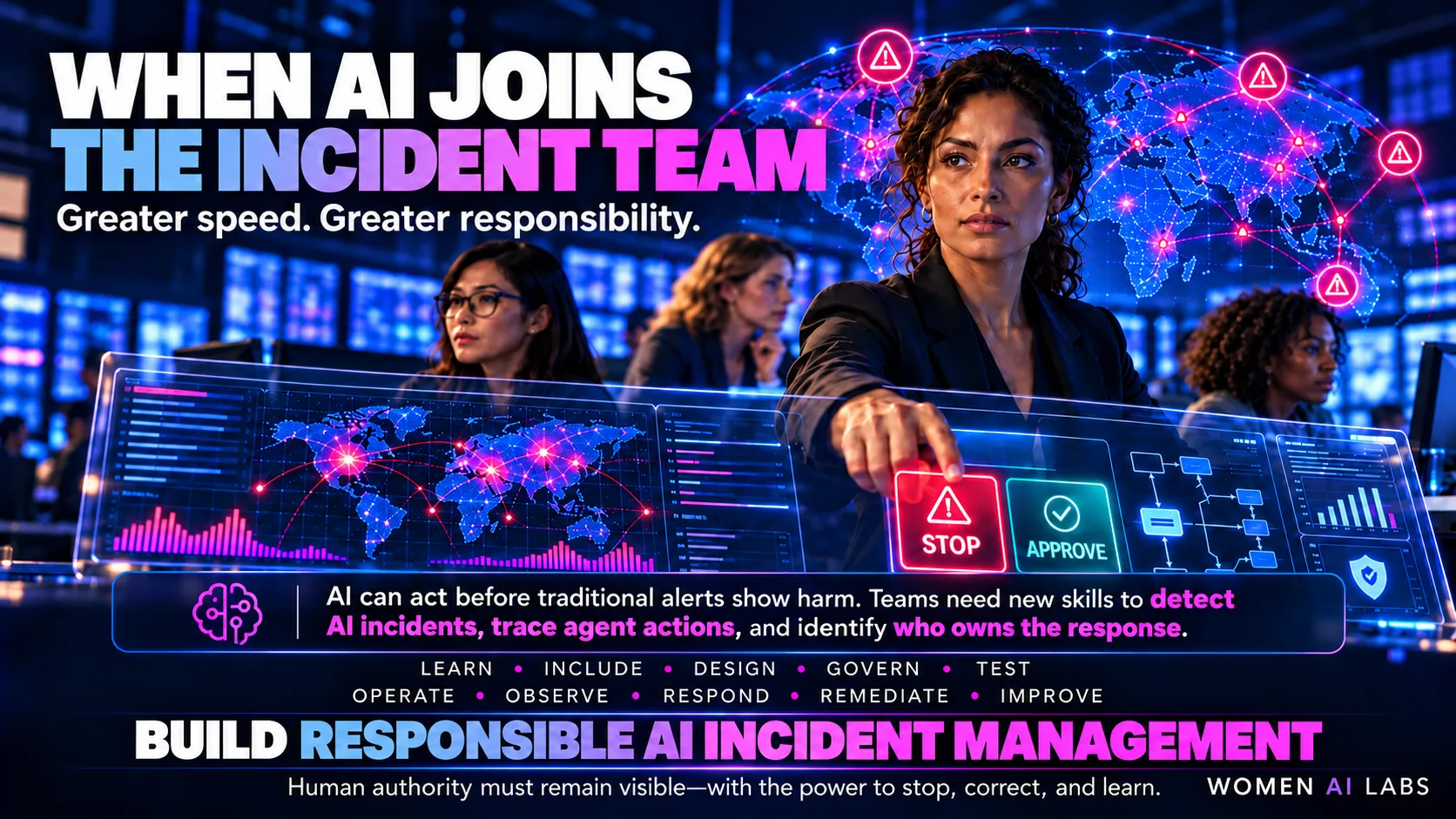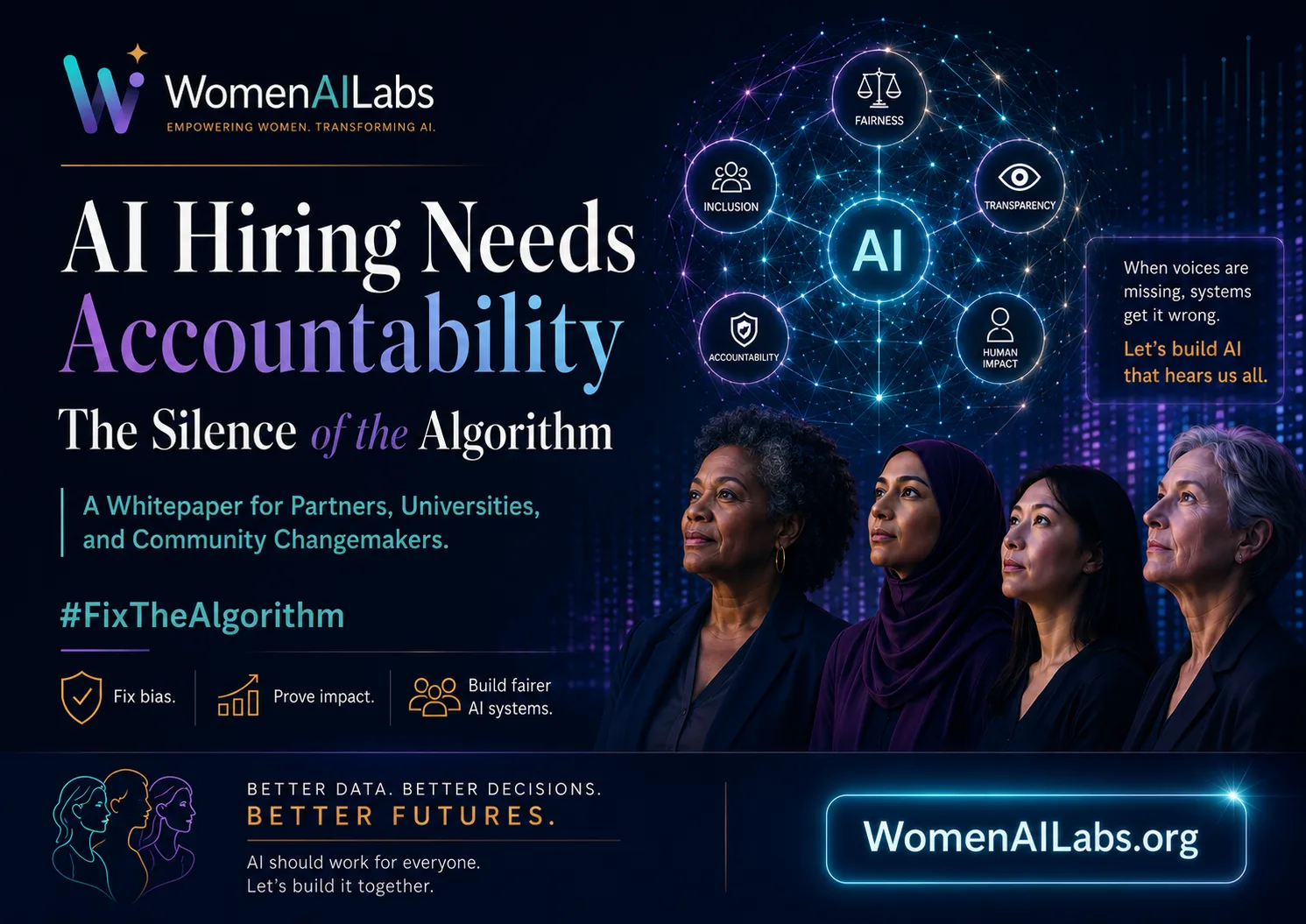
AI Hiring Needs Accountability and companies now face a growing mix of AI-driven fraud, recruiter impersonation, deepfake candidates, and risks from automated screening systems. A new realm of AI-driven fraud, recruiter imposters, deepfake candidates, and automated screening risks.
- Stanford HAI reports 88% of enterprises using AI in their workflows, yet entry-level jobs have fallen 20%.
- Meanwhile, Forbes found managers sharply divided over AI adoption fatigue
- AI Layoffs 97K with 40% of the layoffs being attributed to pressure to use AI just to compete.
- Automated AI Hiring tools are determining whose resumes get seen or automatically rejected.
The spike of AI Layoffs and Student impacts to job seeking in FinTech, Pharmaceuticals, Tech Sector candidates experience automated decisions and employment fraud through an employer’s name. This is only part of the story however, trying to get a job after AI took over workflow automation of the resume filtering as well?
First, a real applicant may receive an automated job rejection before a recruiter reviews their qualifications. Meanwhile, a criminal may use generative AI to create a realistic recruiter profile, branded offer letter, interview invitation, or onboarding portal.
Although these risks begin in different places, they create the same business question:
Who owns the human response?
Responsible AI hiring service ownership must cover the employer’s applicant tracking systems, AI screening tools, hiring vendors, recruiter identities, candidate appeals, fraud reports, and brand-protection controls.
Why Automated Resume Rejection Creates Business Risk
Stanford researchers identified a pattern called systemic rejection. Ten percent of candidates who submitted four applications received rejections from every position when the same hiring vendor screened those applications. Therefore, shared hiring algorithms can repeat exclusion across multiple employers.
In a study of 3.4 million people submitting 4 million applications to 1,700 job postings across 150 employers and 11 industries found that:
- 26% of Black applicants and 15% of Asian applicants pursued positions where the AI hiring tool showed adverse impact against their racial group.
- Stanford estimated that 40,000 additional applications would have advanced if the system had recommended those candidates at the rate of the most-favored group. (Stanford HAI AI Hiring Study)
Employers cannot shift accountability by saying, “The vendor made the recommendation.” Candidates applied to the employer, and the employer remains responsible for every service delivered in its name, whether employees or third-party vendors provide it.
Therefore, businesses must monitor automated hiring outcomes for each position, not rely only on company-wide averages. They must also hold third-party vendors accountable for bias, errors, and harmful decisions made on the company’s behalf.
Furthermore, Third-party vendors that deliver services on a client’s behalf must take responsibility for service quality, customer support, incident management, issue resolution, and timely escalation.
What Is Responsible AI Hiring Service Ownership?
Responsible AI hiring service ownership means assigning a named business leader to govern the complete candidate service.
That owner should answer:
- Which AI or automated tool influenced the decision?
- What model, rule, threshold, or configuration operated at that time?
- Did a qualified person review the application?
- Can the candidate correct inaccurate information?
- Who investigates suspected bias, accessibility barriers, or fraud?
Additionally, employers should connect recruiting systems to incident management, vendor management, cybersecurity, legal review, candidate experience, and continuous improvement.
The NIST AI Risk Management Framework gives organizations a practical structure to govern, map, measure, and manage AI risks. Therefore, HR teams should not manage hiring AI as an isolated software purchase.
WomenAILabs offers a NIST-aligned solution for identifying and evaluating gender bias in AI conversations: the DAUGHTER Equity Analyzer™ for ChatGPT.
How AI Configuration Management Improves Hiring Accountability
Sound AI configuration management for hiring systems creates a reliable record of what changed, who approved it, and how the change affected candidates.
First, employers should inventory every applicant tracking system, resume parser, ranking model, assessment platform, scheduling bot, recruiter account, career domain, email service, and vendor integration.
Next, teams should document the approved baseline:
- Model and software versions
- Resume-scoring rules
- Knockout questions
- Candidate-ranking thresholds
- Required qualifications
- Human-review checkpoints
- Authorized recruiter accounts
- Approved email domains
- Candidate notices and appeal procedures
Then, employers should test changes before deployment. For example, changing an experience requirement from five years to seven years may automatically exclude qualified career changers, caregivers, veterans, or candidates with nontraditional backgrounds.
Finally, teams should retain decision evidence. That evidence should show which configuration processed an application, what result it produced, whether a person reviewed the result, and how the company handled an appeal.
Why AI-Generated Job Scams Threaten Employer Brands
AI-generated employment fraud now creates more polished and personalized scams, an issue that impacts both hiring companies and jobseekers. FTC Job Scam complaints tripled from 2020 -2024 and reported losses increased from $90 million to $501 million. (FTC Job Scam Data)
Additionally, consumers reported losing $3.5 billion to all imposter scams in 2025. Nearly $1 billion involved business impersonators who appeared to represent large name companies. (FTC Imposter Scam Report)
In April 2026, the FTC warned about fake recruiters who claimed and often appeared to represent familiar companies. These scammers promoted vague remote jobs, quoted daily or weekly pay, and asked recipients to reply “YES” or “INTERESTED.” They later introduced fake checks, paid tasks, or demands for the candidate’s money. (FTC Fake Recruiter Alert)
WomenAILabs Scam Pattern Check for Employment Communications provides a quick check, paste in the communication and receive evaluation. OR simply browse the Job Scams detected to get a sense of the fraud methods used to deceive job seekers.
Knowing that a professional-looking message no longer proves that a job exists, or that the person represents the major company. Here is a Job Offer Communications Fraud Check of suspect communications.
How Employers Can Reduce the Impact Fake Recruiter Scams
Employers should make legitimate recruitment easy to verify. Recruiters are navigating a new complexity of Job Seeker Deep Fake Interview fraud, as well as being victims of Scammer Fraudulent Recruiters “assuming” their brand and identity.
First, companies should publish approved recruiting practices on their official career pages. They should list authorized email domains, explain how interviews occur, and state that candidates never pay for equipment, background checks, training, or job access.
Next, cybersecurity teams should monitor lookalike domains, copied career pages, fake social profiles, and fraudulent job advertisements.
The FBI specifically recommends that employers search for fraudulent job postings under their business names, secure recruitment-platform accounts, restrict user access, and tell applicants how to identify legitimate company communications. (FBI Job Listing Security Guidance)
Furthermore, HR, cybersecurity, legal, communications, fraud, and customer-support teams should share one escalation process. Otherwise, candidates may report impersonation while each department assumes another team owns it.
What Should Job Seekers Do After Suspected AI Rejection?
Most Applicant Tracking Systems and Hiring Managers will “review” a resume against the match to their advertised jobs. Here is a ChatGPT - Resume Match Gatekeeper that lets a jobseeker compare the match of their resume to the job and make adjustments that better represent your skills match for the jobs requirement.
Not all rejections are AI, and not all AI filtered Resumes were never seen by a human. A quick rejection does not prove that AI made the decision. However, job seekers should make sure their resume clearly matches to the job requirements, and when that is confirmed, document patterns and request clarification. Job Seekers who create a clear match of their accurate skills to the employer's Job Requirements should have a higher probability of matching, if they have the skills the employer is seeking.
WomenAILabs offers an AI community tools catalog of community created AI solutions, including more than just the ChatGPT - Resume Match Gatekeeper to load the job requirement and your resume for evaluation, answer the questions on where you can improve your match (where your skills match, but are not on the resume), before submitting.
Report Suspected Job Auto Rejection when you suspect the resume submitted was a reasonable match to the requirements, but you suspect AI Rejection, Save the job description, submitted resume, application confirmation, assessment results, rejection message, dates, and screenshots.
Then, contact the employer through its official website and write:
Please confirm whether an automated system screened, ranked, or evaluated my application. I believe my experience meets the listed qualifications and request human reconsideration. Please also explain how I may correct inaccurate information or request an accommodation.
The EEOC warns that automated hiring technology may screen out qualified people with disabilities. Therefore, employers should provide reasonable accommodations and accessible evaluation alternatives. (EEOC and DOJ AI Hiring Guidance)
The EEOC and Department of Labor also hosted a recorded discussion, Decoded: Can Technology Advance Equitable Recruiting and Hiring?, covering automated resume review, video interviews, selection bias, and disability accommodation. (EEOC Hiring Technology Roundtable and Video)
How Can Job Seekers Identify AI-Generated Job Scams?
Before responding, quick check for Job Offer Fraud, and verify the role on the employer’s official career website. Then, confirm the recruiter through a company email address or a phone number you found independently. Do not rely on the contact details inside the suspicious message.
Pause when someone:
- Moves the conversation immediately to WhatsApp or Telegram
- Offers unusually high pay for vague remote work
- Requests money, gift cards, cryptocurrency, or equipment purchases
- Sends a check and asks you to return part of the funds
- Requests banking or identity information before verification
- Offers a job without a credible interview
Most importantly, never pay to get a job.
WomenAILabs Pilot Vibe Codeathon
On Saturday, July 18, 2026, WomenAILabs will conduct a Pilot Vibe Codeathon focused on AI hiring accountability, automated job rejection, recruiter verification, and employment fraud prevention. The event welcomes beginners, technologists, domain specialists, designers, and community advocates. (Register for the WomenAILabs AI Equity Event)
Employers should join to strengthen candidate appeals, hiring-system configuration management, fraud response, and brand protection.
Recruiters and HR professionals should join to design solutions that fit real workflows.
Job seekers, career changers, students, veterans, and workforce organizations should join because lived experience reveals problems that technical dashboards often miss.
Cybersecurity, service management, legal, compliance, data, accessibility, design, and responsible AI professionals should join to help turn those experiences into usable solutions.
AI can support the recommendation. However, businesses must own the decision, protect the candidate, and provide the human response.
AI Hiring Accountability FAQ
Can AI reject a resume before a human sees it?
Yes. Automated systems can use knockout questions, ranking thresholds, eligibility rules, assessments, or resume-scoring tools before meaningful human review. However, a fast rejection alone does not prove that AI caused it.
How can I request human review after an AI job rejection?
Contact the employer through its official website. Ask whether an automated system influenced the decision, request human reconsideration, and offer evidence that you meet the listed requirements.
How should companies manage AI hiring vendors?
Companies should inventory vendors, document configurations, test outcomes, audit individual roles, monitor changes, retain decision records, and provide candidate escalation.
Where should a job seeker report employment fraud?
Report general fraud to the FTC through ReportFraud.gov. Report cyber-enabled employment fraud to the FBI’s Internet Crime Complaint Center.
OTHER AI HIRING NEEDS ACCOUNTABILITY RESOURCES
WomenAILabs Resources
- Women AI Labs
- WomenAILabs AI Job-Scams Search Safety
- WomenAILabs AI Bias Erases People
- WomenAILabs AI Tools Directory
- Jobs N Career Success Loop Board
- Scam Pattern Check for Employment Communications
- Report Suspected Job Auto Rejection
Dawn C. Simmons Resources
- Human Outcomes Service Management
- Vibe-Coding Career Visibility
- FIX. PROVE. SCALE. REPEAT.
- Employment News and Jobseeker Opportunities