NASA Open Science Training: Last reviewed: September 5, 2026
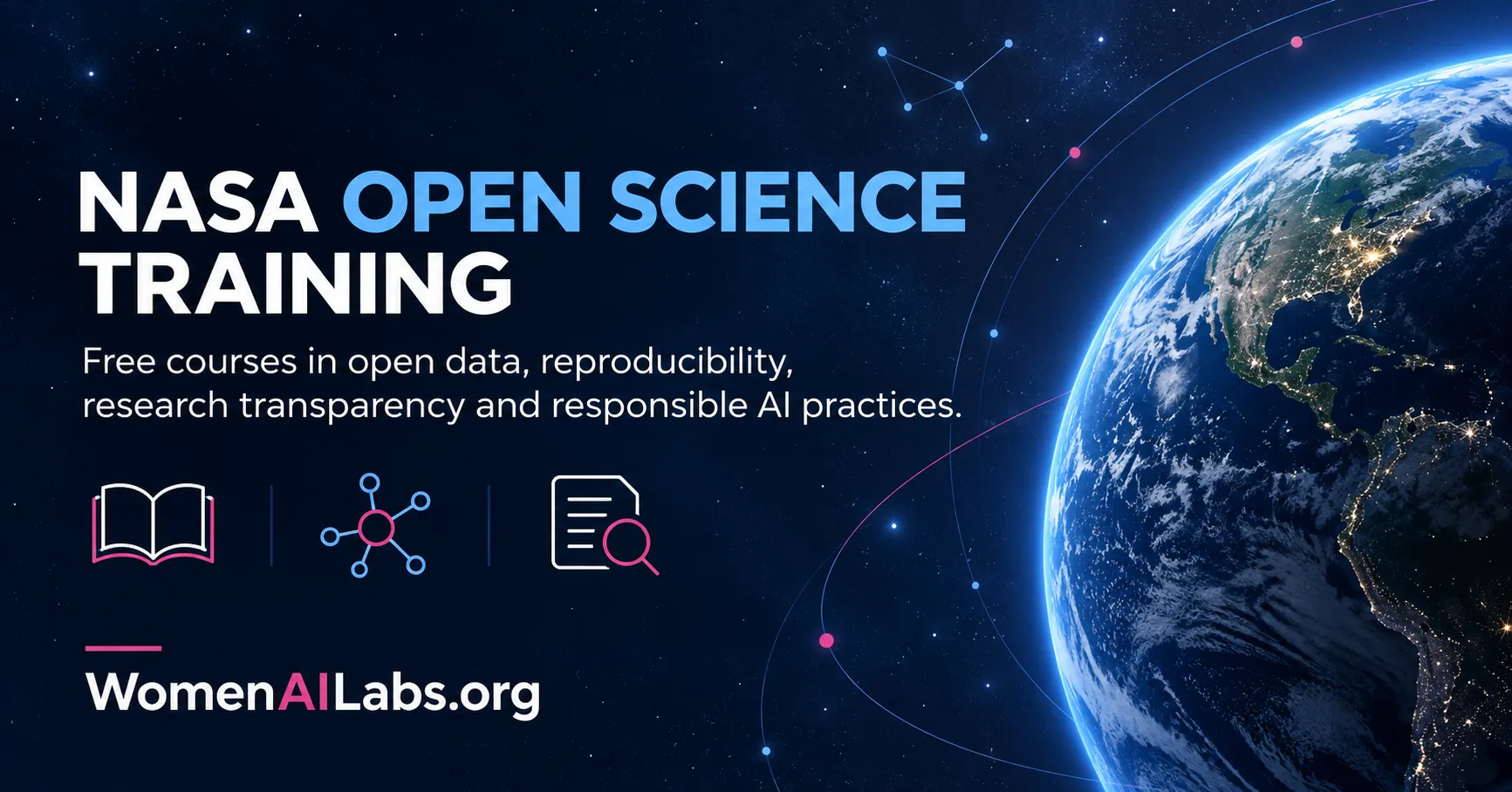
NASA Open Science Training gives researchers, students, managers and curious professionals a practical way to strengthen how they create, document, share and reuse knowledge.
The opportunity matters beyond traditional scientific research.
Artificial intelligence increasingly depends on data quality, documentation, attribution and reliable methods. Leaders also need teams that can explain where information came from, how conclusions were reached, what limitations exist and whether material can be reused responsibly.
Open science builds those habits.
Quick Answer
NASA Open Science Training is free and available to public learners. Open Science Essentials takes approximately two hours. Open Science 101 provides a deeper five-module experience of approximately 12 hours. Successful learners are eligible for a NASA digital badge and certificate.
Compare NASA Open Science Courses
| Course | Time | Best For | Learning Focus | Credential |
|---|---|---|---|---|
| Open Science Essentials | About 2 hours | Leaders, managers, students and professionals seeking an introduction | Open science concepts, open data, collaboration, FAIR principles and research practices | Digital badge and certificate eligibility |
| Open Science 101 | About 12 hours across 5 modules | Learners seeking deeper practical knowledge | Planning, conducting and participating in open science, ethics, legal considerations and best practices | Digital badge and certificate eligibility |
Both courses are self-paced and available to people outside NASA.
Why Open Science Matters for AI
Open science becomes increasingly relevant as organizations adopt artificial intelligence.
Teams cannot govern information effectively when nobody knows where a dataset came from, what permissions apply, how an output was produced or which limitations researchers identified.
Practices such as FAIR principles, persistent identifiers, version control, documentation and responsible licensing provide stronger foundations for research and AI-enabled workflows.
FAIR means making digital research objects findable, accessible, interoperable and reusable. The original FAIR Guiding Principles also emphasize machine-actionable discovery and reuse, which makes the framework increasingly relevant to data-intensive and AI-supported work.
- Service leaders can translate those principles into practical questions.
- Can another team locate the evidence behind an AI-supported recommendation?
- Could someone understand or reproduce the process?
- Does the organization know which data can legally and ethically be reused?
- Have limitations been documented before an AI-supported decision reaches an employee, customer or community?
Open science gives leaders a useful vocabulary for those conversations.
Which NASA Course Should You Take?
Choose Open Science Essentials when you need a quick introduction, manage people who work with research or data, or want to understand the subject before committing additional time.
Select Open Science 101 when you want deeper practical experience with research planning, open data, open code, ethics, legal considerations and responsible sharing.
Managers have another option: learn together.
A team completing the training can develop shared expectations around documentation, attribution, reproducibility, licensing and evidence quality.
That shared language can improve research workflows while supporting stronger AI governance.
NASA Open Science Training Career Benefits
A certificate can show continued learning. Applied evidence demonstrates what you can actually do.
That distinction matters.
Open-science skills can strengthen work involving research, data management, technology, AI governance, program management, policy and service operations. Professionals who understand documentation, provenance, licensing, reproducibility and responsible reuse can contribute to environments that depend on trustworthy information.
Learners can demonstrate those capabilities in practical ways.
A data professional might improve documentation for a shared dataset. An AI practitioner could record the origin, permissions and limitations associated with reference data. A developer might strengthen repository documentation and version control. A manager could introduce clearer standards for evidence, attribution and reuse.
Each example turns learning into something employers and collaborators can evaluate.
NASA also states that Open Science 101 can help researchers prepare to apply for NASA funding.
Career changers can gain a different benefit. Free, self-paced instruction provides a low-cost way to explore a new field, build current vocabulary and identify skills worth practicing before investing in a larger credential or degree.
Women entering technology or returning after a career break may also use the training as one accessible entry point into data, research and AI-related work.
Training alone cannot remove structural barriers to participation. Accessible, credible learning can still reduce one practical barrier by making it easier to determine where to begin and what to learn next.
Turn Learning Into Career Evidence
Use a simple four-step practice:
Learn it. Apply it. Document it. Share the evidence.
- Complete the training.
- Apply one principle to a real research, data, service or AI workflow.
- Record what you changed and what improved.
- Then make that evidence visible through a portfolio, project description, professional profile or workplace improvement story.
The better career question is:
What can you do differently after completing the training?
That is where professional value begins.
Responsible Open Science Requires Governance
Openness still requires judgment. Organizations should protect personal information, intellectual property, security-sensitive material and research participants. Ethical review, informed consent, licensing, accessibility and clear documentation remain essential.
A useful operating principle is simple:
Make knowledge as open as possible and as protected as necessary.
Those habits also support responsible AI.
The National Institute of Standards and Technology AI Risk Management Framework provides a voluntary approach for incorporating trustworthiness into the design, development, use and evaluation of AI systems. Its core functions of Govern, Map, Measure and Manage reinforce the importance of operational accountability.
- NIST is currently revising AI RMF 1.0, so organizations should monitor updates while using the existing framework and supporting resources as practical guidance.
- Open-science practices complement that work.
- Clear provenance can improve accountability. Transparent documentation makes datasets easier to evaluate. Published limitations help teams understand where a model, analysis or research result requires additional scrutiny.
Turn Training Into Measurable Improvement
Choose one research, data or AI workflow.
Ask whether someone outside the immediate team could find the work, understand how it was produced, evaluate the evidence and reuse it responsibly.
Then improve one practice:
- Document a dataset, including its origin, purpose and limitations.
- Clarify licensing, attribution and reuse requirements.
- Record how an AI-assisted conclusion was produced.
- Improve version control or repository documentation.
- Measure what became easier to find, verify, reproduce or govern.
Training becomes organizational capability when teams can demonstrate what improved.
NASA Open Science Training Questions
Is NASA Open Science Training free?
Yes. NASA makes Open Science Essentials and Open Science 101 available to public learners through digital learning platforms. Open Science 101 is explicitly described as free.
How long does the training take?
Open Science Essentials takes approximately two hours. Open Science 101 contains five modules and takes approximately 12 hours in total.
Will I earn a certificate?
NASA states that learners who successfully complete its open-science courses are eligible to receive a digital badge and certificate.
Do I need to work at NASA?
No. NASA provides registration options for researchers, students, managers and other learners outside the agency.
Who should take NASA Open Science Training?
Researchers and students are natural audiences, but the courses can also benefit managers, data professionals, developers, librarians, AI practitioners, program leaders, policy professionals and career changers who work with evidence, information or digital research.
Can open science skills help responsible AI?
Open-science practices involving provenance, documentation, licensing, reproducibility, data stewardship and ethical reuse can strengthen the information foundations organizations use to develop and govern AI.
Can NASA Open Science Training help my career?
It can strengthen a professional profile when learners pair the credential with applied evidence. Completion does not guarantee employment, promotion or research funding. Practical projects, documented improvements and visible proof can make the learning more valuable.
From Learning to Leadership
NASA created these courses to broaden participation in open science.
Leaders can extend that goal by turning individual learning into better organizational practices.
Earn the knowledge. Apply one lesson. Measure what changed. Share the evidence. Then help someone else gain access to the skills.
Women AI Labs invites leaders, career changers and AI practitioners to continue the conversation on LinkedIn. What would change in your organization's AI workflows if teams documented data, methods, limitations and reuse requirements with the same discipline expected in open science?
Other NASA Open Science Training Resources
Continue from learning to practice, proof and opportunity with these resources.
- NASA Open Science Trainings: Review Open Science Essentials and Open Science 101, including current course descriptions, learning objectives, enrollment information, badges and certificates.
- NASA Open Science Trainings: Explore NASA's broader approach to open, transparent and collaborative science.
- NASA Open Science 101 Overview: Learn more about Open Science 101, career development and NASA's description of how the curriculum can help researchers prepare to apply for NASA funding.
FAIR and Responsible AI Resources
- The FAIR Guiding Principles: Review the original published principles for making research objects findable, accessible, interoperable and reusable.
- NIST AI Risk Management Framework: Explore NIST's voluntary framework and current resources for managing AI risks and strengthening trustworthy AI practices.
- Free AI Training for Women : Review verified free AI training opportunities and guidance for identifying legitimate learning programs
Women AI Labs Talent Marketplace
Learning has greater career value when skills connect to opportunity.
Use the Women AI Labs careers resources to explore opportunities and connect learning, practical projects and visible evidence with career discovery.
- Women AI Labs Tools : Practice turns concepts into capability. The Women AI Labs AI Tool Directory helps learners discover AI agents, research platforms, governance resources, development tools, prompt libraries, career tools and other resources for practical experimentation.
- In-Demand Post-AI Careers Explore how human judgment, trusted data, governance, workflow knowledge, AI skills and visible proof are reshaping career value.
- Build AI Foundations First: Data Quality Dimensions Metrics - Dawn C Simmons | ServiceNow Consultant & AI Transformation Expert. Explore the role of reliable data, operational foundations and governance before organizations scale AI.
- AI Bias and Gender Equity: AI Gender Bias Warnings - Dawn C Simmons | ServiceNow Consultant & AI Transformation Expert. Continue exploring how participation, data quality, governance and human accountability affect equitable AI outcomes.
Open science creates greater value when learning leads to practice.
Learn a skill. Apply it to real work. Measure the improvement. Publish the evidence. Help someone else move forward.
#NASA Open Science Training, #Open Science 101, #Open Science Essentials, #open science, #responsible AI, #AI governance, #FAIR data, #research transparency