Free AI Career Capabilities can help women build practical skills, complete university-level coursework, earn credible credentials, and prepare for growing technology careers without immediately paying for an expensive degree or private bootcamp.
7/18/25: Vibe Code AI Jobs and Employment Challenge will give Vibe Coding Skills and work with a team on solving some of the current AI Jobs and Employment Challenges with real world support and solutions.
Women still need a clear occupational goal, practical experience, expert feedback, professional relationships, and opportunities to apply what they learn. Therefore, the strongest pathways connect education to projects, recognized credentials, employer needs, mentoring, or career support.
What are Free AI Career Capabilities?
Free AI Career Capabilities are skills women can develop through no-cost courses, college learning platforms, workforce programs, scholarships, digital credentials, volunteer projects, and supervised workplace assignments.
These capabilities include:
- Generative AI literacy and prompt evaluation
- Data analysis, Python, SQL, and visualization
- Workflow automation and application development
- Cybersecurity, cloud computing, and platform administration
- Responsible AI, privacy, risk, and governance
- ITIL SACM and ServiceNow CMDB, HAM/SAM
- Strategic portfolio, project, and resource management
Most importantly, women should choose training based on the work they want to perform.
For example, an operations professional may need process mapping, automation, privacy, and AI governance. Meanwhile, an aspiring data scientist will also need Python, statistics, data preparation, model evaluation, and portfolio projects.
Which colleges offer free AI career coursework?
Several respected universities now publish free AI courses, open course materials, or no-cost introductory programs. These resources allow women to experience college-level learning before paying for a degree or certificate. However, free university coursework does not always provide academic credit. Learners should confirm whether a program offers free access, a completion certificate, university credit, or only course materials.
Harvard CS50 AI with Python
Harvard’s CS50 Introduction to Artificial Intelligence with Python teaches foundational AI concepts through programming projects.
Learners study search algorithms, classification, optimization, machine learning, neural networks, large language models, and natural-language processing. They also build Python programs that apply those concepts to practical problems.
Harvard makes the OpenCourseWare version available without tuition. Learners who meet the course requirements may also qualify for a free CS50 certificate. However, Harvard explains that the free certificate is designed for vocational and self-directed learning. It does not represent an accredited Harvard academic offering.
Best for: Future AI developers, automation specialists, data professionals, and technical product builders.
University of Helsinki Elements of AI
The University of Helsinki Artificial Intelligence Collection offers a broader entry point for learners with technical or nontechnical backgrounds.
Its courses include Elements of AI, Building AI, Ethics of AI, and several AI in Society topics. The university designed the materials for a wide audience and uses practical cases to explain how AI works and affects society.
The university’s open-course catalog lists coursework in areas such as:
- Introduction to AI
- Building AI
- AI and democracy
- AI, justice, and security
- AI and discrimination
- Ethics of AI
Some listings also carry European Credit Transfer and Accumulation System credits. Because registration and credit conditions may change by course implementation, learners should check the current course page before enrolling.
Best for: Business analysts, policy professionals, responsible-AI practitioners, educators, nonprofit leaders, and beginners exploring technical work.
MIT Open Learning and Universal AI
MIT Open Learning launched Universal AI in 2026 as a self-paced, modular pathway designed to move learners from basic AI fluency toward practical, industry-related applications. The pathway begins with an accessible introductory experience for a broad, global audience.
MIT also identifies free courses in foundation models, generative AI, engineering ethics, technology ethics, product development, and risk analysis. These subjects support both technical careers and leadership roles that oversee AI adoption.
In addition, MIT OpenCourseWare provides free learning materials from more than 2,500 undergraduate and graduate courses. Learners can use lectures, assignments, notes, and related resources to strengthen mathematics, programming, algorithms, data science, and machine-learning foundations.
Best for: AI product leaders, developers, data professionals, risk analysts, engineers, and career changers who want rigorous self-directed study.
Stanford AI course materials
Stanford publishes public materials for CS221: Artificial Intelligence, Principles and Techniques.
The course covers major AI foundations and provides public modules that include slides, recorded content, and notes. These materials can help an advanced learner understand how university AI courses organize reasoning, decision-making, machine learning, and related technical concepts.
Stanford also maintains a broader free online course catalog and free AI content collection.
Public course materials do not automatically include Stanford credit or a professional certificate. Therefore, learners should review the terms for each offering before assuming that a credential is included.
Best for: Advanced technical learners, prospective graduate students, machine-learning professionals, and people evaluating deeper AI study.
Free university course audits through edX
Learners can audit many edX courses from universities such as Harvard, MIT, Georgia Tech, and the University of Cambridge.
Auditing generally provides free access to learning materials. However, graded assessments, extended access, or verified certificates may require payment.
AI course catalog:
Free AI courses on edX
Audit instructions:
How to audit an edX course
How should women choose college AI coursework?
A recognizable university name can add credibility, but the course still needs to support a career goal.
A business professional could begin with Elements of AI or MIT Universal AI. Next, she could build an AI-assisted reporting workflow, governance checklist, or service-improvement proposal.
A future developer could start with Python and then complete Harvard’s CS50 AI course. Afterward, she could publish selected projects, code documentation, test results, and lessons learned in a portfolio.
Someone pursuing responsible AI could combine Helsinki’s ethics and society courses with practical work in privacy, bias evaluation, risk documentation, or policy analysis.
Meanwhile, a future machine-learning engineer could use Harvard, MIT, and Stanford materials to strengthen programming, mathematics, algorithms, model evaluation, and technical communication.
Where else can women learn AI for free?
IBM SkillsBuild Artificial Intelligence Fundamentals offers free instruction in machine learning, natural-language processing, computer vision, neural networks, chatbots, and AI ethics. Learners can also earn an IBM digital credential.
Microsoft Learn provides free instruction in generative AI, agents, language services, computer vision, data, security, and Microsoft’s enterprise technologies.
AWS Skill Builder offers cloud, machine-learning, and generative-AI learning for technical professionals and business users.
Women who want a longer technical pathway can also explore the free Code First Girls CFGdegree or the undergraduate-focused Break Through Tech AI Program.
Why should women explore ServiceNow University?
ServiceNow University provides self-guided learning, career journeys, certification preparation, simulations, and instructor-led options. ServiceNow also offers more than 600 free courses and 18 job-related certification paths through its career-development resources. These pathways combine platform skills with business analysis, implementation, project delivery, and professional capabilities.
Women can explore careers such as:
- ServiceNow system administrator
- Application developer
- Implementation specialist
- Business process analyst
- Platform owner
- Technical project manager
- AI support specialist
- Strategic portfolio management consultant
Some self-directed learning is free. However, advanced instruction, practice tests, and certification exams may carry fees. Learners should confirm the price before registering.
Which SPM and AI careers should women consider?
Strategic Portfolio Management, or SPM, connects strategy to investments, demand, projects, resources, financial plans, and measurable outcomes. As organizations fund more AI initiatives, they need professionals who can determine which ideas support business goals, identify dependencies, allocate resources, monitor risk, and evaluate results. Employers create their own hiring requirements. Still, these ServiceNow credentials can support common career paths:
| Career path | Capabilities to build | Recommended credentials |
|---|---|---|
| ServiceNow administrator | Platform configuration, users, access, reporting | Certified System Administrator |
| Application developer | Workflow design, scripting, testing, application delivery | CSA, then Certified Application Developer |
| SPM consultant | Demand, projects, portfolios, resources, financial planning | CSA, then Certified Implementation Specialist in SPM |
| AI implementation analyst | Requirements, workflow mapping, governance, adoption | CSA, product-specific CIS credential, relevant AI micro-certifications |
| AI platform owner | Strategy, portfolio oversight, risk, value measurement | CIS-SPM, governance education, leadership-level AI learning |
Certification information and career journeys are available through ServiceNow University.
Why does volunteer vibe coding build career skills?
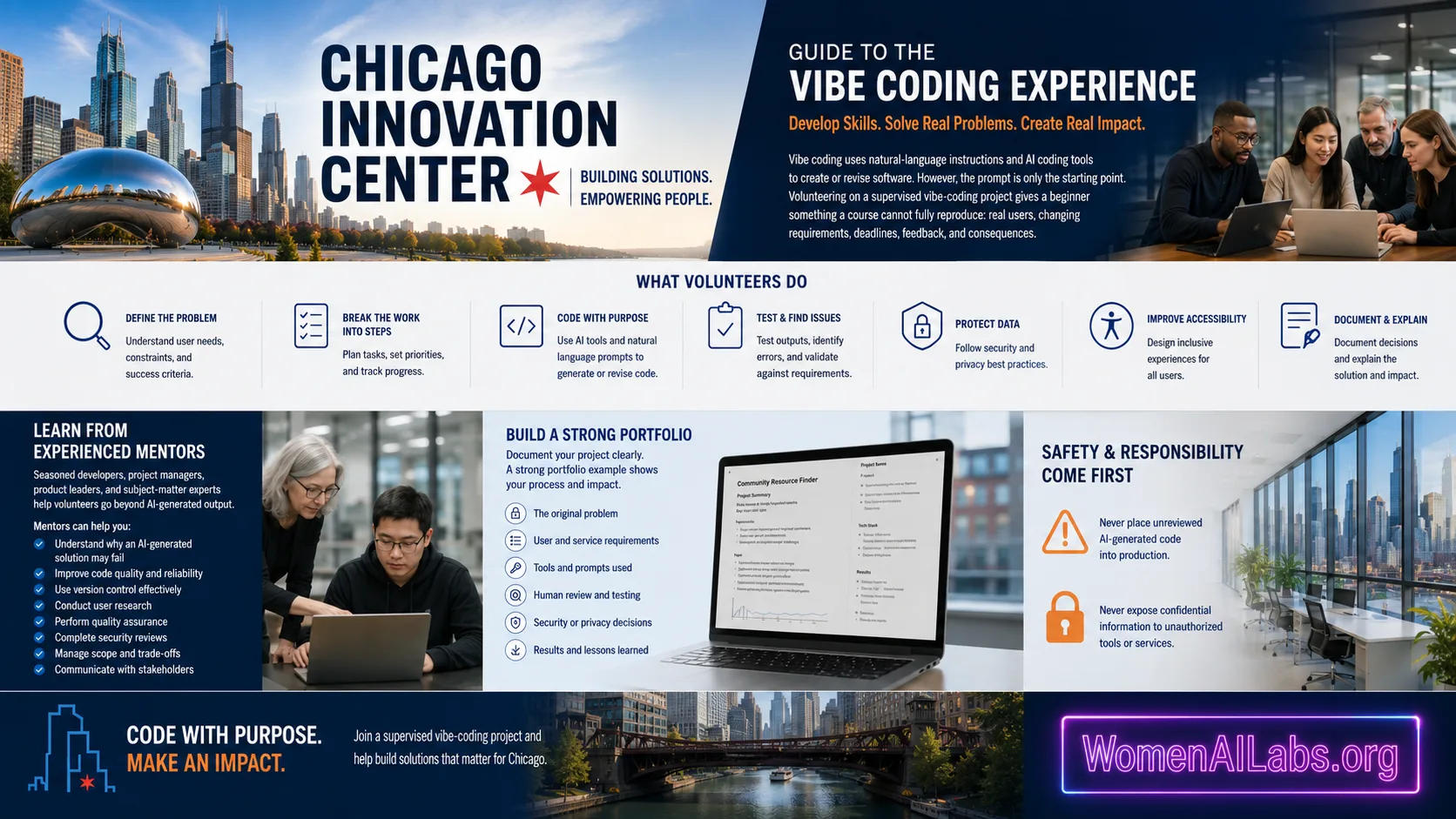
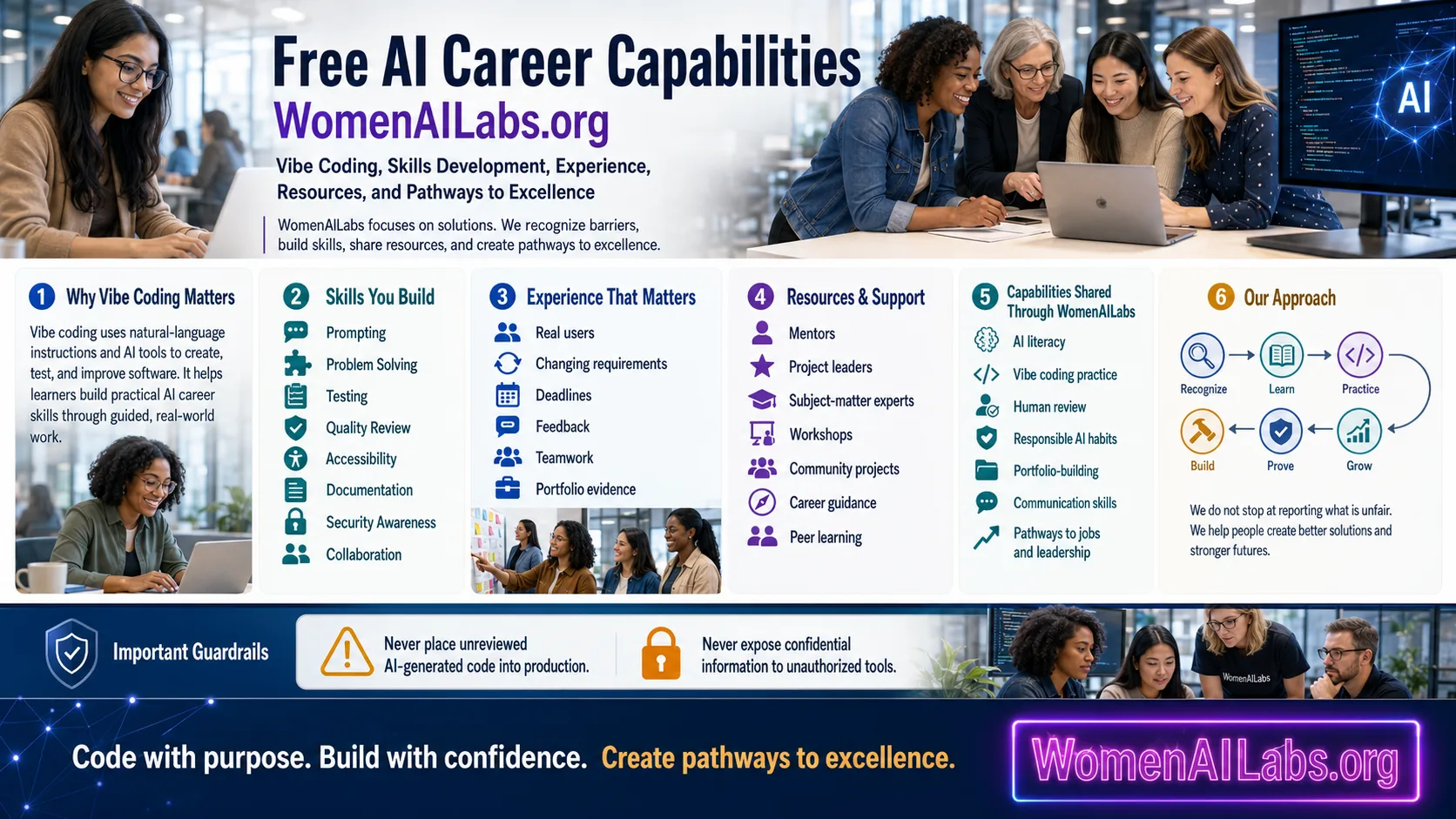
Vibe coding uses natural-language instructions and AI coding tools to create or revise software. However, the prompt is only the starting point. Volunteering on a supervised vibe-coding project gives a beginner something a course cannot fully reproduce real users, changing requirements, deadlines, feedback, and consequences.
Volunteers must participate in defining the problem, break the work into manageable steps, test outputs, identify errors, protect data, improve accessibility, document decisions, and explain the result.
Moreover, seasoned developers, project managers, product leaders, and subject-matter experts can show volunteers why an AI-generated solution fails and how professionals improve it. Mentors can also teach version control, user research, quality assurance, security reviews, scope management, and stakeholder communication.
A volunteer project becomes a stronger portfolio example when the learner documents:
- The original problem
- User and service requirements
- Tools and prompts used
- Human review and testing
- Security or privacy decisions
- Results and lessons learned
Teams should never place unreviewed AI-generated code into production. They also should not expose confidential information to unauthorized tools.
Which AI-related careers show strong demand?
Project management specialists may see about 78,200 openings each year. Management analyst and computer systems analyst employment are each projected to grow 9 percent. These occupations align with SPM, AI implementation, business analysis, workflow transformation, and governance.
- Data Scientists are a fastest growing field with growth estimated 34% through 2034, with about 23,400 openings each year.
- Information security analyst employment is projected to grow 29%, with approximately 16,000 openings annually.
- Computer and information research scientist employment is projected to grow 20%
- Computer and information systems manager roles are projected to grow 15 percent.
How should leaders support career mobility?
Free education removes a price barrier, but leadership must remove participation and opportunity barriers.
- Employers should provide protected learning time, mentors, practical assignments, certification support, and opportunities to present completed work.
- Furthermore, leaders should track who completes training, what participants build, where teams apply new skills, and whether learning leads to expanded responsibility, higher compensation, or promotion.
What could happen if every employer sponsored one woman’s college-level AI course, one supervised project, and one recognized credential?
That approach could turn free learning into measurable mobility. Choose one target role. Complete one credible foundation course. Then build two or three projects that solve recognizable workplace or community problems. Free AI Career Capabilities should produce more than certificates. They should create evidence, confidence, relationships, visibility, and a realistic path toward meaningful work.
Other Free AI Career Capabilities and Resources
- 7/18/25: Vibe Code AI Jobs and Employment Challenge
- 15 Best FREE Figma Courses With Certificates
- AI Demands CMDB Trust
- Association of Generative Artificial Intelligence (AI)
- Bootcamp AI
- Business Process Consultant Careers
- Chicago’s Best Companies to Work For See Built In’s 2025 Best Large Companies to Work For
- Cybersecurity Training Community | SANS Institute
- Fastest Growing Occupations : Occupational Outlook Handbook
- Master Governance Risk Compliance & SecOps
- Multilingual Remote Career Opportunities
- ScholarshipOwl: The fastest path to college scholarships
- ServiceNow HRSD Onboarding Process
- Small Firms in Chicago who use ServiceNow
- Vibe-Coding Career Visibility
- Women AI Labs